OpticChief

New Member
I wanted to share my current process for forming and dyeing PETG visors, since I’ve been getting a lot of questions about how I achieve bright, even colors with a reflective finish. This method is based on my own trial-and-error and on techniques I learned from Galactic Armory and N8TEBB, whose work I respect a lot.
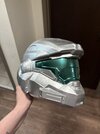
IMG_2472.jpeg
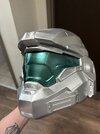
IMG_2391.jpeg


1 – Materials & Forming the Visor​

To start, I ordered clear PETG sheets from McMaster-Carr.
I then printed a visor buck and spent time sanding it smooth, so the final pull would be clean and free of texture marks.
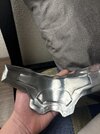
Once the buck was ready, I used my DT2 Vaquform machine to vacuum-form the PETG over the visor shape.
For those unfamiliar, the DT2 is a desktop vacuum former with preset material profiles, including PETG, which you can customize accordingly.
My basic forming process was:
IMG_2474.jpeg
IMG_2400.jpeg

  • Heat the PETG to 150°C until it becomes soft and formable.
  • Lower the heated sheet over the visor buckle.
  • Engage the vacuum to ensure the PETG tightly conforms to the mold's shape.
After it cooled, I carefully trimmed the formed PETG to the final visor shape using a sharp blade, taking my time to ensure the edges were clean and accurate.


2 – Preparing for Dyeing​

Before dyeing, I need to highlight:
My first attempt turned out too dark, so this write-up reflects the improved method I learned from that mistake.
For dyeing, I used:
IMG_2402.jpeg
IMG_2396.jpeg

  • JACQUARD iDye Poly – Kelly Green + Color Intensifier
  • A gallon steel pot
  • A ½-gallon plastic bucket of cold water
  • Stove, thermometer, and stirring tool


  • Important note:
    Ensure the pots and tools you're going to use for or with the dye are not reused for cooking or anything involved later that will be used for consumption.


3 – Mixing the Dye Bath​

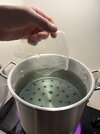
I filled the steel pot about ¾ full with water and placed it on the stove.
The goal was to bring the water to 180–200°F initially. This helps fully dissolve the dye and ensures an even mixture.
Once the water was near boiling, I turned off the heat and added:
IMG_2403.jpeg
IMG_2404.jpeg

  • About ¾ of the dye packet (I didn’t want a super dark green)
  • The entire color intensifier packet
Important note:
The color intensifier does not make the color brighter; its job is to help the dye bond more effectively with the plastic.
I stirred everything thoroughly until the solution was fully mixed.


4 – Controlling Temperature​

After mixing, I turned the stove back on very low, just enough to sustain a constant temperature of 140–145°F:
IMG_2477.jpeg
IMG_2478.jpeg

  • At 150°F, my PETG started to warp during earlier attempts.
  • 140–145°F is safer while still being effective for dye absorption.
This temperature range turned out to be the sweet spot, and I'm using a basic, cheap Taylor-branded thermometer.


5 – Dyeing the Visor​

Once the dye bath was stable, I took a piece of the PETG, which was cut from the outer edges of the sheet that formed the visor, just to sample the colors dipping just to get an idea of what kind of hue of green I wanted for my visor then I began dyeing the visor in short, repeated cycles rather than a single long soak:
IMG_2401.jpeg
IMG_2411.jpeg

  • Place the visor in the dye bath for 4–6 minutes.
  • Remove it and immediately place it in the cold-water bucket for 20–30 seconds.
  • Return it to the dye bath.
  • Repeat this 4–8 times until I reach a color I am satisfied with.
This gradual method helps build the color you want and prevents it from becoming too dark too quickly unless that's what you intend.


6 – Drying & Preparing for Mirror Coating​

After dyeing, I let the visor air dry for about 2 hours.
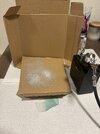
Once dry, I set up my airbrushing area and filled my airbrush with:
IMG_2476.jpeg


• Spaz Stix Ultimate Mirror Chrome

This paint goes on the inside of the visor.


7 – Applying the Mirror Finish​

I applied the chrome in very light, even layers, slowly building up the reflective effect:
IMG_2417.jpeg
IMG_2416.jpeg
IMG_2381.jpeg
IMG_2414.jpeg

  • Don’t spray too heavily at first; multiple thin coats are better than one thick coat.
  • You want the front of the visor to gradually become fully mirrored.

    Safety first and always!
  • I am using a 3M Multi-Purpose Performance Respirator Grey P100 mask to ensure that I am not inhaling any nasty and harmful fumes throughout this process
  • Any Latex gloves tend to work when handling materials as well
If you accidentally apply too much and lose visibility, there’s a recovery trick:
You can lightly place masking tape over the painted side and peel it off; this will remove some of the chrome layer without completely ruining the finish.
That said, be careful: this paint scratches very easily, and any imperfections will be noticeable from the outside.


8 – Conclusion​

IMG_2473.jpeg
IMG_2430.jpeg
IMG_2431.jpeg

This is my current method for making a dyed, mirrored PETG visor.
I’m still experimenting with other techniques and materials, and as I learn more, I plan to share additional methods with the community.
Big thanks again to Galactic Armory and N8TEBB. A lot of what I practice here is inspired by their work.
If you’re trying this yourself, don’t be afraid to test, fail, and refine; that’s exactly how I got to this point.
 

Attachments

  • IMG_2471.jpeg
    IMG_2471.jpeg
    2.3 MB · Views: 21
  • IMG_2401.jpeg
    IMG_2401.jpeg
    1.7 MB · Views: 18
  • IMG_2415.jpeg
    IMG_2415.jpeg
    3.1 MB · Views: 18
  • IMG_2415.jpeg
    IMG_2415.jpeg
    3.1 MB · Views: 21
  • IMG_2381.jpeg
    IMG_2381.jpeg
    2.5 MB · Views: 20
  • IMG_2472.jpeg
    IMG_2472.jpeg
    2.4 MB · Views: 25
This is great!!
Im wanting to move to vacuumed formed visors soon, rather than resin printed as some of the resin ones are to thick, which causes the light to reflect inside the resin and makes it blurry, it's great to see other peoples techniques, im planning to get the same vacuum former.

Have you used Alcllad chrome? I haven't used the spaz stick stuff, I have just ordered some after reading this to see if it's any better. Even if I get the visor clear after sanding the chroming normally makes it to dark or a bit blurry, I have had some good results but its normally with the thinner resin visors.
Do you have a picture of the visibility? that would be a big help.
 
I was totally curious seeing the thread on how other people are going about it but ended up finding the exact same method and brands I currently build with :lol:
Excellent work overall! that came out super clean!
 
This looks really awesome, Optic! I'm curious about your airbrush setup. Do you use a fume hood, or some sort of ventilation system when spraying or do you tend to work outdoors? If indoors, did you use some sort of spraying enclosure? Either way, it looks professional! It's very accurate to your infinite spartan you showed.
 
This looks really awesome, Optic! I'm curious about your airbrush setup. Do you use a fume hood, or some sort of ventilation system when spraying or do you tend to work outdoors? If indoors, did you use some sort of spraying enclosure? Either way, it looks professional! It's very accurate to your infinite spartan you showed.
Thanks a lot, I really appreciate that!

My setup is pretty simple right now. I usually work indoors in a small dedicated area rather than outdoors so I can control dust and consistency. I don’t have a full fume hood yet, but I do use a basic enclosed spray area with airflow, along with a respirator and proper PPE to stay safe while spraying.

Eventually, I’d like to build a more permanent booth setup, but for now, it’s been working well for visor-scale parts. I’m still experimenting and refining the process, so I’ll probably share more details as I upgrade the setup over time.

Thanks again for the kind words!
 
I was totally curious seeing the thread on how other people are going about it but ended up finding the exact same method and brands I currently build with :lol:
Excellent work overall! that came out super clean!
Haha, that’s actually really cool, great minds think alike. It’s reassuring to see the same methods and brands working well across different builds.

Thanks a lot, I really appreciate it! I’m definitely planning to keep experimenting with different techniques and processes to see what produces the best results.

Long-term, I want to move into hydrochroming once I have the proper space and setup to do it consistently and safely.

Would love to see your visors too.
 
Last edited:
This is great!!
Im wanting to move to vacuumed formed visors soon, rather than resin printed as some of the resin ones are to thick, which causes the light to reflect inside the resin and makes it blurry, it's great to see other peoples techniques, im planning to get the same vacuum former.

Have you used Alcllad chrome? I haven't used the spaz stick stuff, I have just ordered some after reading this to see if it's any better. Even if I get the visor clear after sanding the chroming normally makes it to dark or a bit blurry, I have had some good results but its normally with the thinner resin visors.
Do you have a picture of the visibility? that would be a big help.
Thanks a lot, I really appreciate that! Vacuum forming has been a big part of my work.

I’ll try to post a picture of the inside visibility soon. Overall, it’s clear enough that it doesn’t feel impairing to wear. Even with a photo, it probably won’t fully capture what the human eye actually sees through the visor versus what a phone camera picks up, but I’ll share it here as soon as I can for reference.

I haven’t used Alclad chrome yet. Right now, I’m experimenting with different materials, brands, and techniques to find the best balance between visual quality and visibility. Anything that works well, I definitely plan to share here so others can build off it.

A vacuum former is a huge step up, even if you build one yourself. Mine works great, but it’s limited by size despite the price, so a DIY setup can actually offer more flexibility for larger visors or other parts if done right. There are many creators out there with solid designs and tutorials that make it surprisingly achievable.

Long-term, my goal is to move toward hydrochroming vacuum-formed visors. I think ultimately it will produce better exterior finishes while maintaining better visibility, once I have the space and setup to do it properly.
 
Thanks a lot, I really appreciate that! Vacuum forming has been a big part of my work.

I’ll try to post a picture of the inside visibility soon. Overall, it’s clear enough that it doesn’t feel impairing to wear. Even with a photo, it probably won’t fully capture what the human eye actually sees through the visor versus what a phone camera picks up, but I’ll share it here as soon as I can for reference.

I haven’t used Alclad chrome yet. Right now, I’m experimenting with different materials, brands, and techniques to find the best balance between visual quality and visibility. Anything that works well, I definitely plan to share here so others can build off it.

A vacuum former is a huge step up, even if you build one yourself. Mine works great, but it’s limited by size despite the price, so a DIY setup can actually offer more flexibility for larger visors or other parts if done right. There are many creators out there with solid designs and tutorials that make it surprisingly achievable.

Long-term, my goal is to move toward hydrochroming vacuum-formed visors. I think ultimately it will produce better exterior finishes while maintaining better visibility, once I have the space and setup to do it properly.
Thanks man!!

Yeah I did have a DIY A3 vacuum former kit, well still do. but I could never get it to work, the PETG sheet wouldn’t droop enough before it would bubble and whiten I tried it a lot of time but the same results, so I’m wanting to get the DT2 as it looks like it will be able to do most visors.

I have experimented with spray chrome and they all make it so you can’t see out at all. I have ordered some Spaz stick to see what that is like, I have also use AK chrome and that doesn’t work well, goes on to thick and can easily be over done.

I never said but, love how the green turns out really like that colour.

I’m planning to get the vacuum former in march I think that’s if I don’t get anything unexpected happens, but I’m exited to do some test when I get it. .
 
Oh and yeah I’m wanting to do hydrochrome as that seems to be the most affective result, but I haven’t found a lot of tutorials out there for it. I’m sure the kits will come with instructions but it’s nice to see someone else do it, it makes it a bit easier to understand it then.
 

Your message may be considered spam for the following reasons:

If you wish to reply despite these issues, check the box below before replying.
Be aware that malicious compliance may result in more severe penalties.
Back
Top